SUPPLEMENTS FOR MEN

 BEAUTY RANGE
 ENERGY METABOLISM
 HEART & BRAIN HEALTH
 SLIMMING RANGE
 SHAMPOO
 CONDITIONER
 NOURISHMENT
 OIL
OIL SERUM
SERUM



Why Your Acne Keeps Coming Back

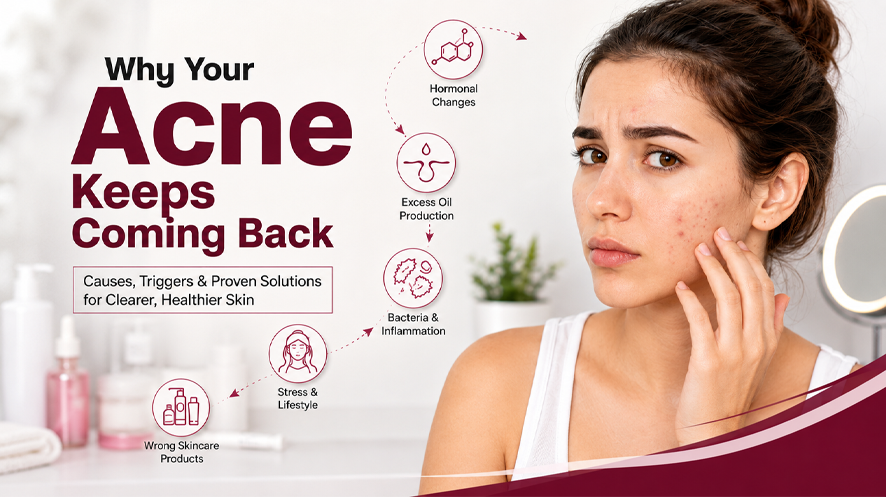
Why Your Acne Keeps Coming Back
You finally get rid of a breakout, only to wake up a few weeks later with new pimples in the exact same places. If this sounds familiar, you’re not alone. Recurring acne is one of the most common skin concerns among teenagers and adults in Pakistan. While many people blame oily skin or dirty pores, the real reasons are often more complex.
Acne keeps coming back because the underlying causes such as excess oil production, clogged pores, hormonal changes, acne-causing bacteria, inflammation, or an unsuitable skincare routine have not been fully addressed. Lasting improvement requires treating both active breakouts and the factors that trigger them.
Many over-the-counter products provide temporary relief but fail to address the root cause. This can lead to a frustrating cycle of recurring pimples, post-acne marks, and reduced confidence.
The good news is that recurrent acne can often be managed with a consistent skincare routine, scientifically formulated ingredients, healthy lifestyle habits, and guidance from a qualified dermatologist when needed.
In this comprehensive guide, you’ll learn why acne returns, the most common triggers, proven prevention strategies, and how laboratory-tested skincare products can support clearer, healthier-looking skin over time.
What Does Recurring Acne Mean?
Recurring acne refers to pimples that continue appearing after previous breakouts have healed because the underlying causes remain active.
Acne is a chronic inflammatory skin condition rather than a one-time event. Even after visible blemishes disappear, excess oil production, clogged hair follicles, and inflammation may continue beneath the skin. Without addressing these ongoing factors, new blemishes can develop repeatedly.
Many people mistakenly stop using their skincare products as soon as their skin begins to look better. Unfortunately, this often allows acne to return within weeks.
Long-term acne management focuses not only on clearing existing pimples but also on preventing new ones from forming.
Why Does Acne Keep Coming Back?
Acne usually returns because one or more underlying triggers continue affecting your skin, including hormones, excess sebum, clogged pores, bacteria, inflammation, genetics, stress, or inconsistent skincare.
Let’s explore the most common reasons.
The Science Behind Acne Formation
Acne develops when four key factors occur together: excess oil production, clogged pores, bacterial overgrowth, and inflammation.
Healthy skin naturally produces sebum, an oily substance that helps protect the skin barrier. Problems begin when excess sebum combines with dead skin cells, creating a plug inside the hair follicle.
This blocked pore provides an ideal environment for acne-causing bacteria to multiply. Your immune system responds with inflammation, resulting in blackheads, whiteheads, papules, pustules, nodules, or cysts.
Unless these underlying biological processes are controlled, acne is likely to return.
10 Common Reasons Your Acne Keeps Coming Back
1. Hormonal Fluctuations
Hormonal changes are among the leading causes of persistent acne in both teenagers and adults.
Hormones known as androgens stimulate the sebaceous glands to produce more oil. Increased oil production raises the risk of clogged pores and inflammation.
Hormonal acne often appears on the jawline, chin, lower cheeks, and neck. Women may notice flare-ups before menstruation, during pregnancy, or around menopause. Conditions such as polycystic ovary syndrome (PCOS) can also contribute.
Because hormonal acne originates inside the body, topical products alone may not completely control it. Persistent or severe hormonal acne should be assessed by a qualified dermatologist.
2. Excess Oil Production
Too much sebum creates an environment where clogged pores and acne become more likely.
Sebum is essential for healthy skin, but excessive production mixes with dead skin cells and blocks pores. Genetics, hormones, heat, humidity, and certain skincare products can all increase oil production.
Instead of trying to strip away all oil with harsh cleansers, choose products that help regulate oil while maintaining the skin’s natural barrier.
3. Dead Skin Cell Buildup
When dead skin cells are not removed efficiently, they accumulate inside pores and contribute to acne formation.
Your skin constantly renews itself, shedding old cells and replacing them with new ones. If this natural process slows down or becomes disrupted, dead skin cells can combine with oil to clog pores.
Gentle exfoliating ingredients such as salicylic acid can help keep pores clear without excessive irritation when used appropriately.
4. Acne-Causing Bacteria
An overgrowth of acne-related bacteria can trigger inflammation and recurring pimples.
Certain bacteria naturally live on healthy skin. Problems arise when blocked pores create a low-oxygen environment where acne-causing bacteria multiply more easily.
This bacterial growth activates the immune system, leading to redness, swelling, tenderness, and pus-filled blemishes.
A balanced skincare routine that supports the skin barrier can help reduce conditions that encourage bacterial overgrowth.
5. Inconsistent Skincare Routine
Skipping treatments or changing products too frequently often prevents acne from improving.
Many acne-fighting ingredients require several weeks of consistent use before noticeable results appear.
Frequently switching products, stopping treatment early, or applying products only during breakouts can make acne seem like it’s constantly returning.
A simple, consistent routine is generally more effective than using many different products at once.
6. Using the Wrong Products
Heavy, pore-clogging, or irritating skincare products may contribute to recurring acne.
Some cosmetics, moisturizers, sunscreens, and makeup products contain ingredients that may clog pores in acne-prone individuals.
Look for products labeled as non-comedogenic and formulated specifically for acne-prone or oily skin.
For individuals looking for laboratory-tested skincare, SkinBeauty develops scientifically formulated products designed to support acne-prone skin with carefully selected ingredients. Choosing products that match your skin type can help maintain a healthier skin barrier while reducing unnecessary irritation.
7. Overwashing Your Face
Washing your face too often can actually make acne worse.
Excessive cleansing strips away protective oils, causing irritation and prompting the skin to produce even more oil.
For most people, cleansing twice daily with a gentle cleanser is sufficient.
8. Touching Your Face Frequently
Constantly touching or picking at pimples increases irritation and delays healing.
Hands carry dirt, oil, and microorganisms that can transfer to the skin. Picking at blemishes also increases the risk of post-inflammatory hyperpigmentation and acne scars.
Keeping your hands away from your face is a simple but effective habit for healthier skin.
9. Stress
Stress doesn’t directly cause acne, but it can worsen existing breakouts.
During periods of stress, the body releases hormones such as cortisol that may increase oil production and inflammation.
Managing stress through adequate sleep, regular physical activity, and relaxation techniques may support overall skin health.
10. Genetics
If acne runs in your family, you may be naturally more prone to recurring breakouts.
Genetics can influence oil production, skin sensitivity, inflammatory responses, and how easily pores become clogged.
Although you can’t change your genes, consistent skincare and appropriate treatment can still significantly improve acne control.
Signs You’re Treating Symptoms Instead of the Cause
Many people unknowingly focus only on visible pimples rather than the underlying processes driving acne. Warning signs include:
- Acne returns within a few weeks of stopping treatment.
- Breakouts consistently appear in the same areas.
- You rely on spot treatments instead of daily prevention.
- Your skincare routine changes frequently.
- You continue developing new blemishes despite temporary improvements.
Recognizing these patterns is the first step toward achieving longer-lasting results.